Nigeria’s power situation is a national embarrassment. The grid is unreliable, voltage fluctuates like a yo-yo, and diesel is expensive. Yet, contractors are buying mobile concrete plants like they’re going out of style. Why? Because the construction boom demands it. But here’s the painful truth: most buyers ignore the power requirements until the plant arrives. Then reality hits. The generator they bought doesn’t have enough kVA. The voltage drops, the PLC restarts, and the batch is ruined. This isn’t just frustrating—it’s expensive. I’m here to argue that understanding your power architecture is more important than the plant’s output rating. Don’t believe me? Read on. And bring a calculator.
1. The Three Faces of Power: Grid, Gen-Set, and Solar Hybrid
You have three choices. The national grid is the cheapest, but it’s also a liar. It promises 415V three-phase but delivers 300V during “brownouts” (which happen daily). A mobile plant’s motors hate low voltage. They draw more current, overheat, and trip. So, most contractors default to diesel generators. But a generator is not a simple “plug and play” device. You must size it correctly. Oversizing wastes fuel. Undersizing burns up the windings. The third option—solar hybrid—is gaining ground in the South where sunshine is plentiful, but it requires battery banks and inverters. Each choice has a cost. Each choice has a fight attached.
1.1 Generator Sizing: The Hard Math
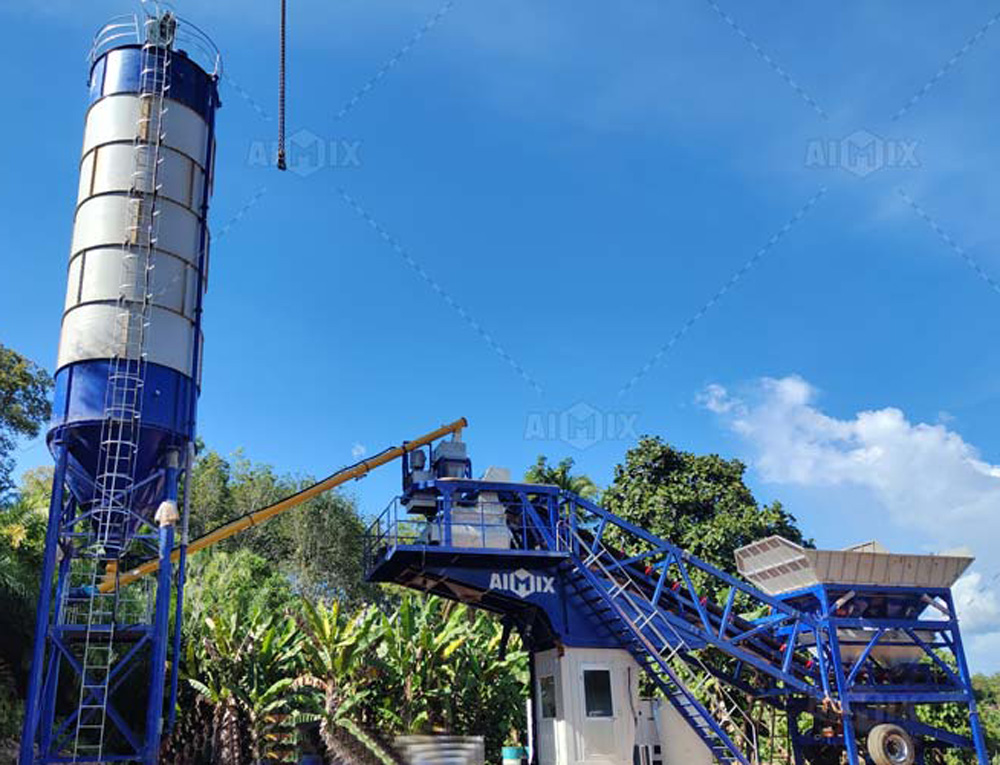
Stop guessing. A typical mobile concrete plant (60 m³/h) has a total connected load of around 110 kW. That’s the sum of all motors: mixer (45 kW), screw conveyors (3 x 7.5 kW), air compressor (15 kW), and belt conveyors (various). But you never start all motors simultaneously. The mixer is the bully. It draws 3 to 4 times its rated current during start-up (called locked rotor amps). So, your generator must handle that surge. A 110 kW plant needs a generator rated at minimum 200 kVA. That’s a 250 hp diesel engine. Anything smaller will stall when the mixer kicks in. I’ve seen it happen. The lights dim. The plant groans. Then silence. Don’t let that be you.
And don’t trust the generator seller’s “generous” advice. Many will sell you a 150 kVA unit because it’s in stock. They’ll say, “It will work, just start the mixer first.” That’s nonsense. When the screw conveyor starts a second later, the cumulative load will trip the breaker. Demand a generator sizing calculation in writing, based on the plant’s motor schedule. If the seller can’t produce one, walk away.
1.2 Voltage Regulation and Frequency Stability
Nigerian grid voltage is a rollercoaster. It can dip to 180V in some areas, then spike to 480V when load sheds. Mobile plant electronics—PLCs, weigh scales, touchscreens—are sensitive. They expect 220V ±10%. Beyond that, they reset, lose calibration, or fry. A good generator has an Automatic Voltage Regulator (AVR). The AVR maintains steady output even when the engine RPM fluctuates. Cheap generators omit the AVR or use a crappy capacitor-based system. Insist on a generator with a brushless alternator and a solid-state AVR. Additionally, install a three-phase power conditioner between the generator and the concrete batching plant in Nigeria. It’s an extra ₦500,000, but it will save you from replacing a ₦2 million control board when the voltage spikes.
2. The Silent Killer: Power Factor and Harmonic Distortion
Electric motors are inductive loads. They cause the current to lag behind the voltage. That lag is called power factor (PF). A PF of 0.8 means you’re paying for 100 kVA but only getting 80 kW of useful work. The rest is wasted as heat. Generators hate low PF. They must be derated. A 200 kVA generator running at 0.8 PF delivers only 160 kVA of usable power. That’s dangerously close to your 110 kW requirement (which is about 140 kVA). Add a bit of harmonic distortion from the variable frequency drives (VFDs) on your screw conveyors, and the generator trips. The solution? Install power factor correction capacitors at the plant’s main distribution panel. They cost about ₦300,000 and reduce the current draw by 25%.
2.1 Harmonics and VFDs: The Unseen Chaos
Variable Frequency Drives are wonderful. They let you ramp up the mixer speed slowly, reducing mechanical shock. But VFDs also inject harmonic currents back into the line. Harmonics are multiples of the base frequency (50 Hz). The 5th harmonic (250 Hz) is particularly nasty. It overheats generator windings and causes nuisance tripping of circuit breakers. To fight harmonics, specify a generator with a “dedicated inverter grade” or “three-phase” output. Also, install line reactors (chunky inductors) on the input side of each VFD. A good line reactor costs ₦50,000 per VFD. It’s a small price for sanity. Contractors who skip this step often hear strange buzzing noises from their electrical panels. That’s the sound of money burning.
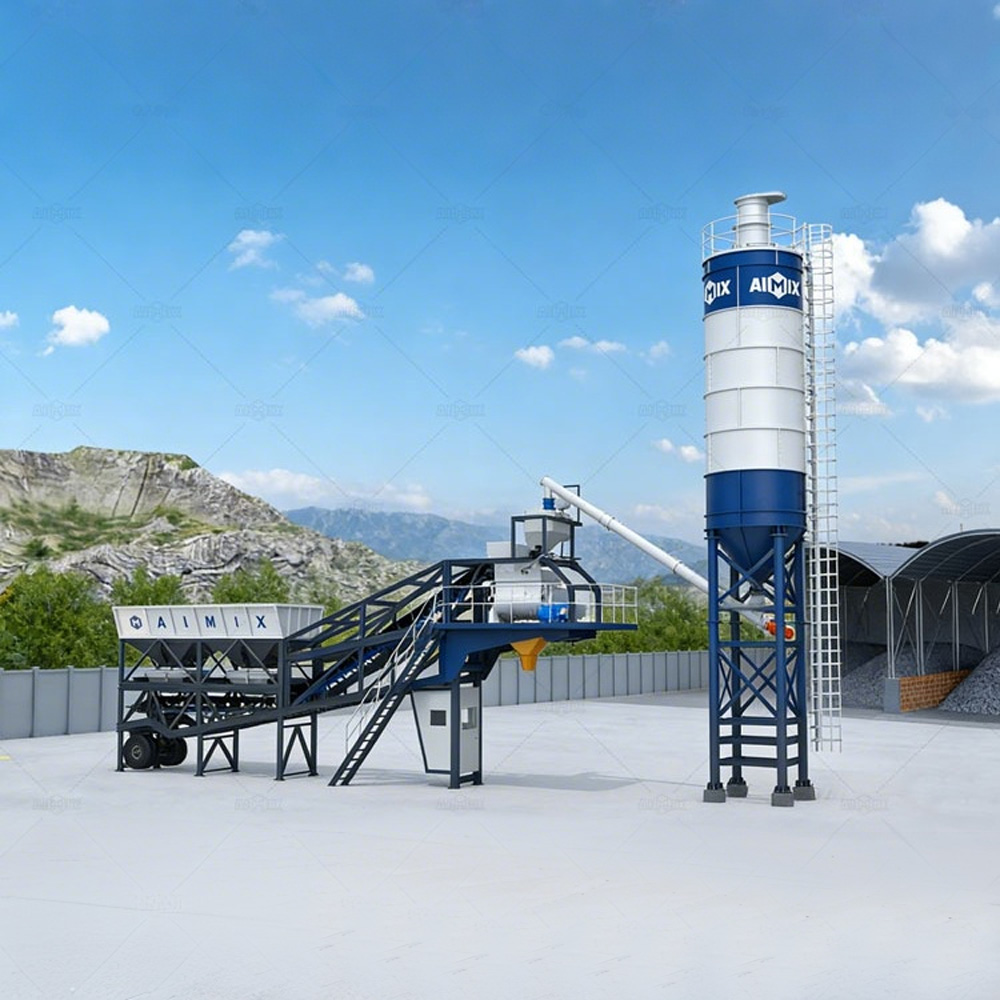
One more thing: grounding. Nigerian sites often have terrible grounding systems. A single rod driven into dry sandy soil is useless. You need a ground loop: three copper rods spaced 3 meters apart, bonded together with 50 mm² bare copper wire. This keeps the neutral voltage stable. Without good grounding, the VFDs will generate common-mode noise that corrupts the PLC’s analog signals. Your weigh scales will jump around. You’ll get random readings. The plant will produce inconsistent concrete. Fix the ground first. Then worry about the generator.
2. Fuel Logistics: The Real Cost of Running a Plant
Let’s argue about fuel. A 200 kVA generator running at 70% load consumes about 40 liters of diesel per hour. At current Nigerian pump prices (₦700 per liter), that’s ₦28,000 per hour. Run the portable concrete batch plant for 8 hours: ₦224,000 daily. Over 22 working days: nearly ₦5 million monthly. That’s more than the salary of your entire crew. Many contractors look at the plant’s price and ignore the fuel bill. That’s a fatal error. The fuel will cost more than the plant within two years. So, what’s the solution?
2.1 Electric Drives vs. Diesel Drives
Some mobile plants offer a “diesel over hydraulic” option. Instead of electric motors, they use a single diesel engine (150 hp) to drive a hydraulic pump. That pump then powers the mixer, conveyors, and screw feeders hydraulically. The advantage? No generator needed. No power factor issues. The disadvantage? Hydraulic systems are less efficient (about 70% vs. 90% for electric). They also require more maintenance—hydraulic oil changes every 1,000 hours, filter replacements, and seal repairs. In remote areas where diesel is hard to find, the diesel-over-hydraulic plant might make sense. But near cities, the electric plant plus generator is still cheaper to run. Why? Because electric motors are simply more efficient at converting fuel to motion. A 45 kW electric mixer uses about 8 liters of fuel-equivalent per hour (through the generator). A 45 kW hydraulic mixer, driven by a diesel engine, uses 12 liters per hour directly. That’s 50% more fuel. Do the math.
If you absolutely must use a diesel-over-hydraulic plant, buy one with a variable displacement pump. This pump only delivers the flow needed, not full flow all the time. It can cut fuel consumption by 20% during partial loads (like when the mixer is not fully charged). Standard fixed-displacement pumps waste energy by pushing excess oil through a relief valve, turning diesel into heat. That heat then requires an oversized radiator, which consumes more engine power. It’s a vicious cycle. Avoid it.
2.2 The Solar Hybrid Case: Not Ready for Prime Time?
I hear excited whispers about solar-powered concrete plants. The idea is seductive: free energy after installation. But let’s be realistic. A 60 m³/h plant requires 110 kW of continuous power. A solar array that size would cover half a football field. The battery bank would cost ₦50 million and weigh 10 tons. And on a cloudy day? The generator must still run. There are a few pilot projects in South Africa running hybrid systems, but they use the grid as a backup, not diesel. In Nigeria, without a reliable grid, solar hybrids are not economically viable for mobile plants. They might work for stationary batching plants with large roof areas and net metering agreements (which don’t exist in Nigeria). For now, stick with diesel. But invest in a fuel management system. Track every liter. Plug leaks. Train operators to shut down the generator during extended breaks. Small savings add up.
Final Advice: Don’t Be a Victim of Power Illiteracy
Nigerian contractors are tough. They build roads, bridges, and houses under impossible conditions. But many are power illiterate. They buy a mobile concrete plant, hook it up to a rusty generator, and pray. Then they blame the plant manufacturer when it fails. That’s not fair. The plant is likely fine. The power system is the culprit. So, here’s my passionate plea: hire an electrical engineer before you sign the purchase order. Not a technician. Not an electrician. A real engineer who understands load flow, harmonics, and grounding. Pay that person ₦200,000 to design your power system. It’s the best money you’ll spend. Then buy the generator, the power conditioner, and the line reactors. Do the grounding properly. Train your operator on starting sequences (mixer first, then conveyors, then screw feeders). And finally, accept that the fuel bill will be your largest operating cost. Plan for it. Budget for it. Conquer it. Your mobile concrete plant will thank you with years of reliable service. And your profit margin will stop leaking out through the exhaust pipe.