Concrete placement in Jamaica is often discussed in terms of pumping capacity: how much concrete can be delivered per hour, how far it can be pumped, and whether the equipment can reach the required location. Yet pumping is only one segment of the workflow. For projects involving confined urban sites, elevated structures, bridges, housing developments, and infrastructure works, the quality and consistency of concrete before pumping can be equally consequential. A pump cannot compensate for poorly mixed concrete, nor can high pumping capacity eliminate inefficient placement.
This is where planetary mixing and boom placement become important. Planetary mixing can provide more intensive and uniform blending before concrete enters the pumping system, while a boom provides controlled placement at locations that would otherwise require extensive manual handling or additional equipment. When these functions operate as an integrated workflow, concrete can move from material preparation to final placement with fewer interruptions. For Jamaican contractors, this combination can be particularly valuable where site access, labor coordination, terrain, and project density make conventional concrete handling cumbersome.
Why Concrete Workflow in Jamaica Requires More Than Pumping Capacity
Site Access Can Become a Concrete Placement Constraint
Jamaican construction projects can present highly variable site conditions. Urban developments may have restricted working areas, while projects in hilly or less-developed areas can involve uneven terrain, narrow access routes, or considerable distances between material storage and the final pouring location.
Under such conditions, pumping alone does not resolve every logistical problem. Concrete still needs to be produced with the appropriate consistency, transported through the delivery system, and positioned accurately at the point of application.
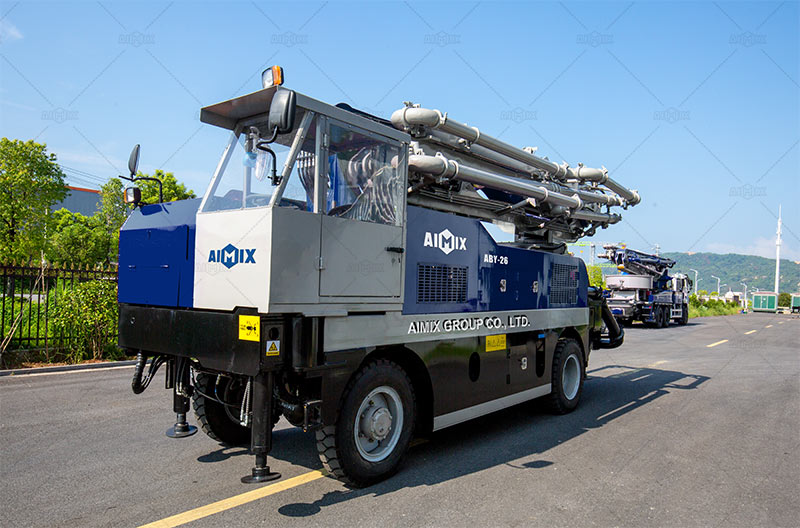
A concrete mixer and pump system that combines these stages can simplify the workflow. Instead of depending on separate batching, transit, and pumping arrangements, contractors can coordinate production and placement through a more compact equipment configuration. This can reduce the number of interfaces where delays occur.
Concrete Consistency Influences Pumping Performance
Concrete must have suitable workability and uniformity before it enters a pumping line. Variations in mixing can affect the behavior of the concrete during pumping, particularly when the material contains coarse aggregates or when the pipeline is relatively long.
A powerful pump does not automatically produce smooth concrete delivery. If the mixture contains poorly dispersed cement paste, uneven moisture distribution, or aggregate concentrations, pumping may become more difficult and placement quality may suffer.
This makes mixing performance an important part of the overall pumping equation. The objective is not simply to move concrete quickly. It is to prepare a homogeneous mixture that can pass through the delivery system consistently and arrive at the placement point in a usable condition.
How Planetary Mixing Improves the Front End of the Workflow
Intensive Mixing Supports More Uniform Concrete
Planetary mixers use a mixing action in which mixing tools rotate around their own axes while also moving around the mixing chamber. This creates a multidirectional mixing pattern rather than relying solely on simple drum rotation.
The result can be a more intensive blending process, particularly useful when concrete requires thorough distribution of cement, water, sand, and aggregate. Uniformity matters because the concrete leaving the mixer should closely resemble the concrete entering the boom concrete pump throughout the batch.
For construction projects where structural elements must meet specified performance requirements, this consistency provides a more dependable foundation for subsequent pumping and placement.
Better Mixing Can Reduce Disruptions During Pumping
A well-mixed concrete batch has a more predictable composition. That predictability can be advantageous when concrete moves through a pipeline, especially when the operation requires continuous placement.
Imagine a slab pour where crews, reinforcement workers, formwork teams, and finishing personnel are all working according to a carefully coordinated sequence. If concrete delivery becomes erratic, the consequences extend beyond the pump operator. Workers may have to wait, reposition, or accelerate other activities.
Consistent mixing helps establish a steadier supply. The benefit is therefore not limited to concrete quality; it extends into workforce coordination and site productivity.
From Mixing Quality to Placement Reliability
The relationship can be viewed as a chain:
Accurate proportioning → intensive mixing → consistent concrete → stable pumping → controlled placement
Weakness at any stage can undermine the stages that follow. Planetary mixing strengthens the beginning of this chain, giving the pumping system a more consistent material to handle.
How Boom Placement Changes the Final Stage of Concrete Delivery
Controlled Reach Reduces Manual Concrete Handling
Pumping concrete to a general area is not the same as placing it precisely where construction crews need it. Once concrete arrives at the work zone, it must still be distributed across the formwork.
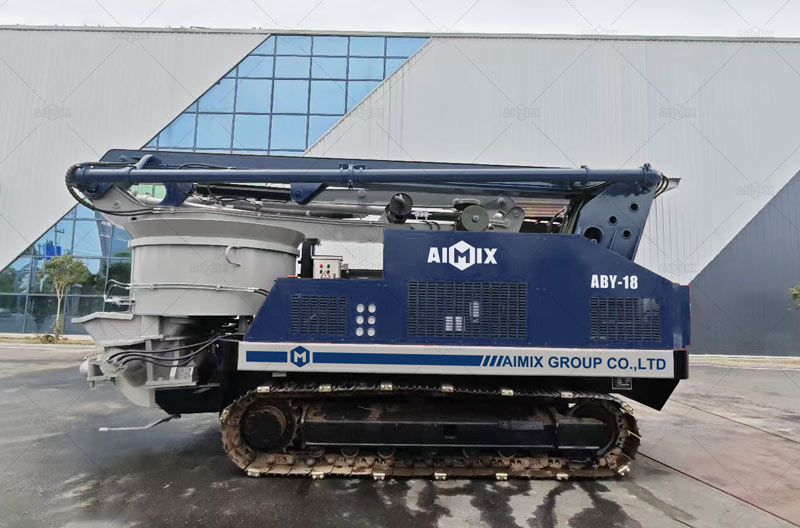
A boom provides a different approach. Its articulated structure can position the delivery end at different locations within its working envelope, allowing concrete to be placed progressively rather than relying on workers to move hoses over long distances.
This distinction becomes significant on larger slabs, foundations, walls, columns, and elevated structures. Instead of repeatedly repositioning a separate delivery arrangement, the boom can provide controlled access to multiple pouring points.
Vertical and Horizontal Reach Improve Site Flexibility
Construction sites are rarely two-dimensional. Concrete may need to move upward to an elevated floor, across a wide slab, or around structural obstacles.
A boom system can address these requirements by combining vertical and horizontal movement. The exact working range depends on the equipment configuration, but the fundamental advantage is positional flexibility.
For Jamaican projects with restricted ground-level access, this can reduce dependence on temporary access arrangements. Concrete can be directed toward the required location while the main machine remains positioned in a practical operating area.
Placement Precision Helps Maintain a Continuous Pour
Continuous pouring is particularly important for structures where construction joints should be carefully controlled. Frequent interruptions can complicate finishing operations and create additional coordination requirements.
With controlled boom placement, the discharge point can move as the pour progresses. This allows the placement team to maintain a more orderly sequence and reduces unnecessary movement of concrete around the site.
Why Integrating Mixing and Boom Placement Can Strengthen the Entire Workflow
Fewer Equipment Interfaces Mean Fewer Coordination Points
Traditional concrete supply may involve a batching plant for sale, transit mixers, a separate concrete pump, workers managing hoses, and additional equipment for difficult placement areas. Each interface introduces another opportunity for delay.
An integrated mixer-pump or mixer-and-boom configuration reduces some of these interfaces. Concrete can be mixed on site and delivered directly through the pumping system, while boom placement handles the final positioning.
This does not eliminate the need for proper site planning. It changes the logistics equation. Fewer separate machines can mean fewer movements, simpler scheduling, and less dependence on precise coordination between multiple equipment operators.
Mobility Becomes Particularly Valuable on Distributed Projects
Not every Jamaican construction project has a large centralized concrete production area. Smaller developments, remote works, and projects with changing work zones may benefit from equipment that can move with the construction operation.
An integrated system can reduce the need to establish extensive fixed infrastructure for every pouring location. The equipment can prepare concrete closer to where it is needed and then deliver it through the pumping and boom-placement system.
This can be advantageous where transportation distances are substantial or where conventional ready-mix delivery is difficult to coordinate.
Matching Equipment Configuration to the Project Is Essential
Planetary mixing and boom placement are not universal substitutes for every concrete production method. Their value depends on project scale, concrete demand, site access, required placement height and distance, and the expected frequency of concrete pours.
A contractor working on a compact residential project may prioritize maneuverability and simple operation. A larger infrastructure project may place greater emphasis on continuous output, boom reach, pumping pressure, and long-duration reliability.
The correct approach is therefore to evaluate the complete concrete workflow rather than selecting equipment from one specification alone.
A Practical Evaluation Framework
Before choosing equipment, contractors can examine several questions:
- Where will raw materials be loaded and mixed?
- How far must fresh concrete travel?
- How high or far must concrete be placed?
- How much working space is available around the equipment?
- Can the machine reach multiple pouring points without frequent repositioning?
- Does the mixing system provide the consistency required for pumping?
- How will the equipment fit into the project’s labor and scheduling structure?
These questions reveal whether an integrated solution actually improves the project’s workflow.
Ultimately, the advantage of modern concrete pump equipment in Jamaica extends beyond pumping capacity. Planetary mixing addresses the quality and uniformity of the concrete before delivery, while boom placement addresses the precision and flexibility of its final destination. Together, they connect two stages that are often considered separately.
A well-designed concrete workflow should not merely move material from one location to another. It should minimize interruptions between mixing, pumping, and placement. When these functions are properly matched to site conditions, contractors can create a more coherent operation—one that reduces unnecessary handling, improves placement control, and makes better use of both equipment and labor.