Environmental regulations are becoming one of the most important factors influencing the design and operation of a concrete batching plant Peru project. While production capacity, mobility, and investment costs remain critical considerations, environmental compliance is now equally important when selecting equipment. Peru and Colombia are two of Latin America’s most active construction and infrastructure markets, yet their environmental priorities differ significantly. These differences directly affect how contractors configure batching plants, manage emissions, and control waste.
For investors, contractors, and equipment suppliers, understanding these regulatory differences can help avoid compliance issues and improve project efficiency. Whether selecting a mini concrete plant for urban construction or a mobile concrete plant for remote infrastructure projects, adapting plant configurations to local environmental requirements has become essential. In addition, experiences from concrete mixing plants in Chile provide useful regional insights into sustainable plant operation and environmental management.
As governments continue strengthening environmental standards, concrete producers must look beyond production capacity and consider long-term sustainability. The ability of concrete batching plant Peru(planta dosificadora de concreto Perú) to meet environmental requirements often determines whether a project can operate smoothly and remain competitive in the market.
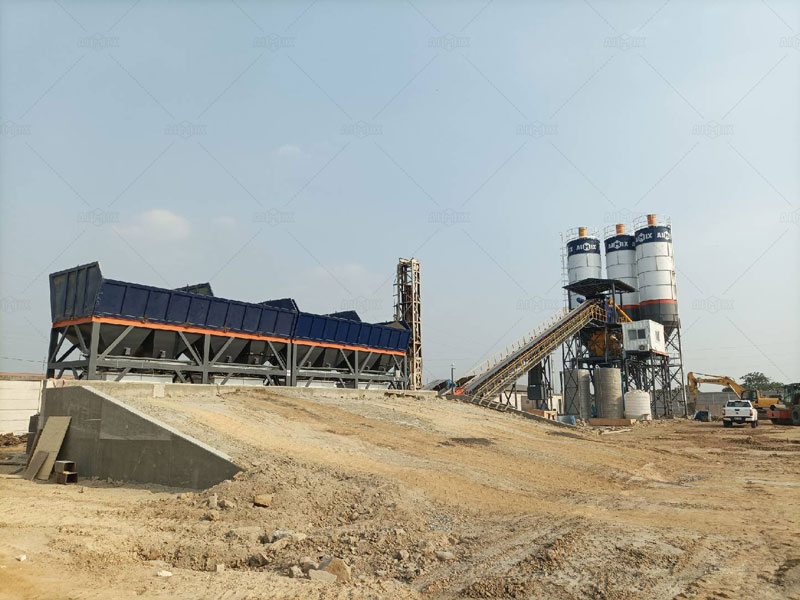
Understanding the Environmental Policy Landscape
Although Peru and Colombia share many economic similarities, their environmental regulations for construction and industrial activities have developed differently.
Peru’s Regulatory Priorities
Peru places significant emphasis on controlling dust pollution and protecting water resources. This focus is especially important in mining regions and densely populated urban areas where environmental impacts can affect both communities and ecosystems.
- Strict dust emission controls for aggregate handling and cement storage
- Mandatory wastewater collection and treatment systems
- Noise reduction requirements near residential areas
- Environmental monitoring during large infrastructure projects
As a result, a typical concrete batching plant Peru installation often includes enclosed conveyors, high-efficiency dust collectors, and water recycling systems as standard components.
Colombia’s Regulatory Priorities
Colombia focuses more heavily on air quality, carbon emissions, and ecosystem protection. Many construction projects are located near environmentally sensitive areas, requiring additional safeguards.
- Stricter control of airborne particulate emissions
- Environmental impact assessments for temporary installations
- Land restoration requirements after project completion
- Protection measures for nearby forests, rivers, and wildlife habitats
Consequently, operators often need additional filtration systems and site management measures when deploying a concrete batching plant Peru-style configuration in Colombia.
How Mini Concrete Plant Configurations Should Be Adjusted
A mini concrete plant(mini planta de concreto) is commonly used for residential developments, municipal projects, and small commercial construction works. Although compact in size, these plants must still comply with environmental regulations.
Adjustments Required in Peru
For Peru, a mini concrete plant should prioritize dust containment and water conservation. Operators frequently install enclosed aggregate bins and baghouse filters to minimize airborne dust. Water recycling tanks are also becoming increasingly common because authorities closely monitor wastewater discharge.
Another important consideration is noise control. In urban construction zones, noise restrictions may require sound-insulated control rooms and vibration-reduction measures.
Adjustments Required in Colombia
In Colombia, emission reduction is often the primary concern. A mini concrete plant may need upgraded filtration systems and more efficient power management solutions. Since many projects are located near environmentally protected areas, temporary plant sites may also require additional environmental permits.
These requirements can increase initial investment costs, but they help ensure long-term compliance and reduce environmental risks.
Mobile Concrete Plant Solutions for Remote Projects
The popularity of the mobile concrete plant has increased significantly across Latin America. Mobility allows contractors to reduce concrete transportation distances and improve project efficiency, particularly in remote regions.
Why Mobile Plants Are Growing in Peru
Mining expansion and transportation infrastructure projects have created strong demand for the mobile concrete plant in Peru. Remote project locations often make fixed installations impractical.
To comply with Peruvian regulations, mobile units typically include:
- Portable dust collection systems
- Integrated water recycling equipment
- Enclosed cement storage facilities
- Automated environmental monitoring systems
These features help ensure that a concrete batching plant Peru operation can maintain compliance even when relocated frequently.
Special Considerations in Colombia
For Colombian projects, the mobile concrete plant(la planta de hormigón móvil) often requires additional environmental safeguards. Since many projects are located near forests, rivers, or mountainous ecosystems, operators must carefully manage emissions and site restoration.
Plant layouts are frequently designed to minimize land disturbance. Temporary foundations, efficient fuel systems, and rapid site restoration plans are becoming increasingly important components of environmental compliance strategies.
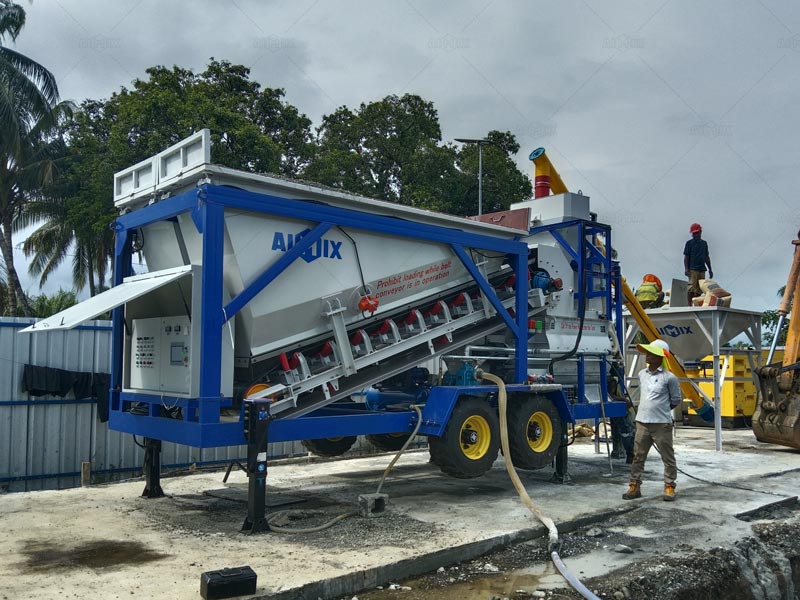
Lessons from Concrete Mixing Plants in Chile
The development of concrete mixing plants in Chile offers valuable lessons for both Peru and Colombia. Chile has invested heavily in sustainable construction technologies, particularly in mining and infrastructure sectors.
Advanced Dust Control Systems
Many concrete mixing plants in Chile utilize highly efficient baghouse filtration systems and enclosed material handling equipment. These technologies significantly reduce particulate emissions and improve workplace conditions.
Water Recycling and Conservation
Water scarcity in several regions has encouraged concrete mixing plants in Chile to adopt sophisticated water recycling systems. These systems can reduce freshwater consumption while maintaining concrete quality.
Digital Environmental Monitoring
Another important trend among concrete mixing plants in Chile(tendencia entre las plantas hormigoneras en Chile) is the use of digital monitoring technologies. Sensors continuously track dust levels, water usage, and energy consumption, allowing operators to respond quickly to compliance issues.
Many of these technologies are now being incorporated into both mini concrete plant and mobile concrete plant designs throughout Latin America.
Future Trends in Plant Configuration
Environmental regulations are expected to become even stricter in the coming years. As a result, the future of the concrete batching plant Peru market will likely focus on sustainability, automation, and resource efficiency.
Several trends are already emerging:
- Greater use of renewable energy sources
- Smart environmental monitoring platforms
- More efficient dust suppression technologies
- Enhanced water recycling capabilities
- Low-emission transportation and logistics solutions
Equipment suppliers that can provide environmentally optimized solutions will be better positioned to serve both Peru and Colombia. At the same time, experiences from concrete mixing plants in Chile will continue influencing regional best practices.
As environmental policies evolve, successful projects will depend on selecting the right plant configuration for each market. Whether investing in a concrete batching plant Peru project, deploying a mini concrete plant in an urban area, or operating a mobile concrete plant in a remote region, adapting equipment to local regulations will remain a key factor in achieving long-term operational success and sustainable growth.