A 30 ton gantry crane is widely used in steel yards, precast concrete plants, logistics terminals, workshops, and heavy fabrication facilities. It is designed to handle substantial loads with stability and precision. However, one critical but often underestimated factor that directly affects its actual lifting performance and operational safety is ambient temperature.
While many users focus on rated capacity, span, and lifting height, ambient temperature can significantly influence mechanical behavior, electrical performance, hydraulic efficiency, and even structural integrity. In real-world working environments, ignoring temperature conditions can lead to reduced lifting efficiency, accelerated wear, or in extreme cases, safety risks.
This article explains why ambient temperature matters for a 30 ton gantry crane, how it impacts different crane systems, and what engineers and operators should consider when selecting or operating equipment in different climates.
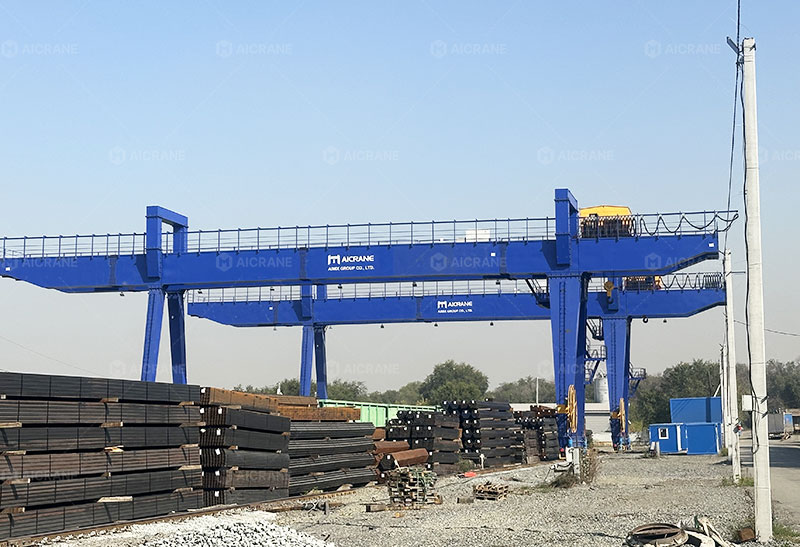
1. Understanding Rated Capacity vs. Real Working Conditions
A 30 ton gantry crane is typically rated under standard conditions defined by international design norms (such as ISO or FEM standards). These standard conditions usually assume:
- Moderate ambient temperature (around 20°C to 40°C)
- Stable humidity
- Normal wind conditions
- Standard duty cycle assumptions
However, in real-world applications, cranes often operate in environments ranging from:
- Arctic cold (-30°C or lower)
- Desert heat (+45°C or higher)
- Humid coastal regions
- Industrial environments with thermal fluctuations
These conditions can cause the crane’s effective working performance to deviate from its nominal rating, especially if thermal limits of components are exceeded.
2. How High Temperatures Affect a 30 Ton Gantry Crane
High ambient temperatures are one of the most common challenges in industrial gantry crane operations, especially in steel mills, foundries, and Middle Eastern or African projects.
2.1 Motor Performance Degradation
Electric motors used in gantry cranes are designed with a specific insulation class (commonly F or H). When ambient temperature rises:
- Motor winding temperature increases
- Insulation aging accelerates
- Efficiency decreases
- Risk of overheating protection shutdown increases
If the cooling system cannot dissipate heat effectively, the motor may require load derating, meaning the crane may not safely lift the full 30 tons continuously.
2.2 Brake System Sensitivity
High temperatures can affect electromagnetic and hydraulic brake systems:
- Brake linings may wear faster
- Holding torque may reduce under thermal stress
- Hydraulic brake fluid viscosity changes
This can lead to reduced braking reliability, especially during repetitive lifting cycles.
2.3 Expansion of Steel Structure
A gantry crane’s main beam and legs are typically made of structural steel. In high temperatures:
- Thermal expansion occurs
- Small geometric deformations may appear
- Alignment accuracy can be slightly affected over long spans
Although these changes are usually within design tolerances, extreme heat environments require careful engineering compensation.
2.4 Control System Instability
Electrical control components such as PLCs, inverters, and sensors are sensitive to heat:
- Overheating can cause signal errors
- Frequency converters may trigger protective shutdowns
- Electrical cabinets require enhanced cooling or air conditioning
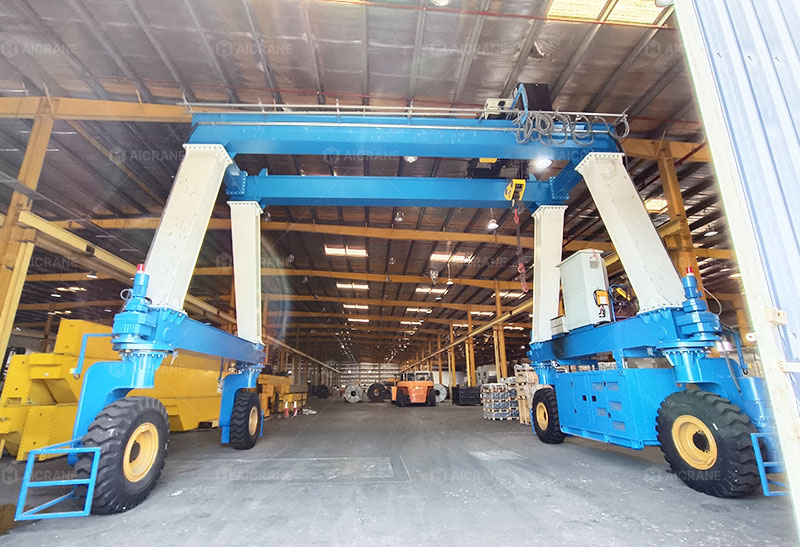
3. How Low Temperatures Affect a 30 Ton Gantry Crane
Cold environments introduce a completely different set of challenges, particularly in northern regions, ports, or outdoor winter operations.
3.1 Material Brittleness Risk
At very low temperatures:
- Steel toughness decreases
- Impact resistance reduces
- Risk of brittle fracture increases (especially at weld joints)
Crane structures must therefore be designed with low-temperature-grade steel when used in extreme cold regions.
3.2 Lubrication Thickening
Lubricants in gearboxes, wheel assemblies, and hoisting mechanisms become more viscous:
- Increased mechanical resistance
- Slower startup response
- Higher torque demand from motors
If not properly selected, lubrication issues can significantly reduce crane efficiency.
3.3 Hydraulic System Performance Drop
For cranes using hydraulic components:
- Hydraulic oil viscosity increases in cold weather
- Pump efficiency decreases
- Cylinder response becomes sluggish
This directly affects smooth lifting and lowering operations.
3.4 Electrical System Challenges
Low temperatures can also cause:
- Condensation inside electrical cabinets when temperature fluctuates
- Cable brittleness
- Sensor malfunction in extreme cold
4. Impact on Load Capacity and Duty Cycle
One of the most important effects of ambient temperature is its influence on safe working load and duty cycle.
Even though a crane is rated for 30 tons, extreme conditions may require:
- Reduced lifting frequency
- Lower maximum continuous load
- Longer cooling intervals between cycles
For example:
- In high heat environments, continuous lifting at full load may require derating to 80–90%
- In cold environments, slow startup cycles may be required to protect motors and gear systems
This does not mean the crane is unsafe – it means the operational envelope changes with temperature.
5. Electrical System Protection and Thermal Design
Modern gantry cranes, including systems designed by manufacturers such as Aicrane, often integrate advanced thermal protection systems to ensure safe operation across a wide temperature range.
Key design features include:
- Thermal sensors in motors and gearboxes
- Temperature-controlled electrical cabinets
- Frequency inverter protection logic
- Automatic shutdown in overheating conditions
- Optional heating systems for cold climates
These systems help maintain performance stability and prevent component failure under extreme environmental conditions.
6. Wind and Temperature Interaction
Although wind is not temperature itself, ambient conditions often correlate with environmental stress.
For outdoor 30 ton gantry cranes:
- High temperature zones may also experience thermal updrafts
- Cold regions may experience wind chill effects that affect operator comfort and equipment icing
Wind load combined with thermal expansion can influence:
- Crane stability
- Hoisting precision
- Structural stress distribution
7. Operator Safety Considerations
Ambient temperature does not only affect equipment—it directly impacts operators.
In high temperatures:
- Heat stress and fatigue reduce reaction time
- Visibility may be affected by glare or thermal haze
- Control cabin cooling becomes essential
In low temperatures:
- Reduced dexterity affects control accuracy
- Ice formation increases slip hazards
- Metal surfaces can cause cold contact injuries
Proper working conditions are essential for safe heavy duty gantry crane operation at full 30 ton capacity.
8. Design Adaptations for Extreme Temperatures
To ensure reliable performance across different environments, engineers typically implement several adaptations:
For high-temperature environments:
- Heat-resistant motor insulation (Class H systems)
- Enhanced ventilation or air-conditioned control cabins
- High-temperature lubricants
- Oversized cooling systems for drives
For low-temperature environments:
- Low-temperature steel grades (e.g., Q355D or equivalent)
- Oil heaters in hydraulic and gearbox systems
- Cold-resistant electrical cables
- Enclosed drive systems
These adaptations ensure that a 30 ton gantry crane can maintain stability and efficiency even under harsh conditions.
9. Practical Recommendations for Users
If you are planning to deploy a 30 ton gantry crane, consider the following:
- Evaluate your local temperature range before selecting crane specifications
- Confirm motor insulation class and thermal limits
- Ensure electrical cabinets are climate-protected
- Select appropriate lubrication for seasonal conditions
- Consider optional heating or cooling systems for extreme environments
- Work with experienced suppliers who can customize design for your site conditions
Conclusion
Ambient temperature plays a far more important role in crane performance than many users realize. For a 30 ton gantry crane, temperature affects everything from motor efficiency and braking reliability to steel structure behavior and electrical system stability.
Understanding these impacts helps ensure:
- Safe lifting operations
- Longer equipment lifespan
- Reduced maintenance costs
- Stable performance under varying environmental conditions
In modern industrial applications, cranes are no longer designed only for load capacity—they are engineered for environmental adaptability. Proper attention to ambient temperature ensures that a 30 ton gantry crane performs reliably not just on paper, but in real working conditions.