The self-loading concrete mixer has emerged as a game-changing asset for construction firms prioritizing speed, autonomy, and cost-efficiency. By integrating a loader, a mixing drum, and a transport vehicle into one compact unit, these machines function as mobile batching plants that can go anywhere. Whether it is a self-loading concrete mixer Peru contractors utilize for challenging mountain roads, a self-loading concrete mixer Bolivia companies deploy for remote housing projects, or a unit serving urban infrastructure in Paraguay, the operational advantages are immense. However, many buyers make the mistake of focusing only on the initial self-loading concrete mixer price(autohormigonera precio), ignoring the subtle, long-term expenses that can erode profit margins.
To maximize your return on investment, it is crucial to analyze the “Total Cost of Ownership” (TCO). This includes everything from daily fuel consumption to the logistical hurdles of international shipping. Below, we break down five hidden costs you must consider before signing a purchase agreement.
Maintenance Cycles and Specialized Spare Parts
While a high-quality self-loading mixer is built for rugged environments, it is far from maintenance-free. These machines operate under high mechanical stress, constantly handling abrasive aggregates like sand and crushed stone. The internal mixing blades, hydraulic seals, and high-pressure hoses are “wear parts” that require periodic replacement.
A significant hidden cost arises when parts are not locally available. If you are operating a self-loading concrete mixer Peru(un auto hormigonera Perú) based projects require in remote regions, or a self-loading concrete mixer Bolivia sites depend on in high-altitude areas, the cost of flying in specialized hydraulic components can be staggering. Furthermore, machine downtime while waiting for international shipping can lead to project penalties that far exceed the cost of the part itself.
How to Manage It
Before purchasing, demand a 2-year recommended spare parts package. Ensure the manufacturer has a localized service presence or at least a standardized inventory of parts that are compatible with local hydraulic and engine brands. Investing slightly more in a brand with a robust regional support network will save you thousands in emergency logistics later.
Fuel Efficiency and Environmental Adaptability
Fuel is often the highest variable operating expense. The self-loading concrete mixer price may seem attractive on a low-end model, but these units often utilize older, less efficient engine designs. Because a self-loading mixer performs multiple functions—loading, mixing, and driving—simultaneously, the engine load is consistently high.
In regions like Bolivia, where high altitudes can reduce engine efficiency, a poorly optimized machine will consume significantly more fuel to produce the same volume of concrete. Similarly, for a self-loading concrete mixer Paraguay crews use in humid, heavy-soil conditions, the transmission and engine must work harder to navigate the terrain. Over several years, a machine with poor fuel economy can cost an additional 20% of its original purchase price in wasted diesel.
How to Manage It
Evaluate the engine’s power-to-weight ratio and look for modern turbo-charged engines that maintain performance at varying altitudes. Request fuel consumption data for both “mixing mode” and “transport mode” to get an accurate picture of daily running costs.
Operator Competency and Productivity Gaps
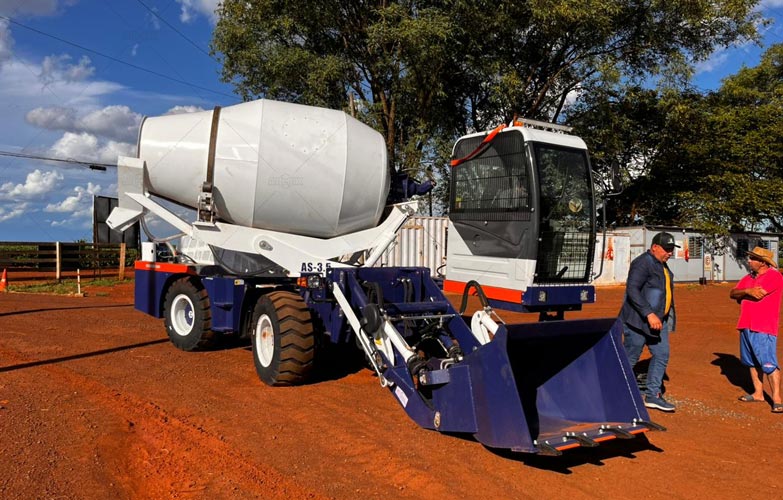
A self-loading mixer is more complex to operate than a standard transit mixer or a traditional loader. It requires the operator to manage the weighing system, drum rotation speeds, and loading shovel movements simultaneously. If the operator is not properly trained, you face hidden costs in the form of “rejected loads”—concrete that does not meet strength specifications due to improper water-to-cement ratios.
In the competitive markets where a self-loading concrete mixer Peru or Bolivia firms operate, a lack of operator skill also leads to increased mechanical wear. Rough handling of the loading arm or improper gear shifting on inclines accelerates the degradation of the transmission and hydraulic cylinders. This results in premature repair bills that should not occur for years under normal use.
How to Manage It
Budget for professional operator training as part of the initial investment. Many top-tier suppliers offer on-site commissioning and training programs. A certified operator can improve daily productivity by 15-20% and significantly extend the machine’s service life.
Logistics, Duties, and Regulatory Compliance
The “factory price” is rarely the final price. For international buyers, the hidden costs of shipping and importation can be substantial. When bringing a self-loading concrete mixer Paraguay projects need into the country, or importing units into Peru and Bolivia, you must account for ocean freight, inland transport, port handling fees, and VAT.
Furthermore, local regulations regarding engine emissions or road-safety standards can lead to unexpected expenses. If a machine does not meet the specific environmental standards of the destination country, you may face heavy fines or the need for expensive retrofitting before the machine is allowed on-site. These bureaucratic and logistical costs can add 10% to 30% to the total self-loading concrete mixer price.
How to Manage It
Work with a supplier experienced in the South American market. Request a “landed cost” estimate that includes all duties and taxes. Ensure the machine is pre-configured to meet the technical and environmental regulations of your specific region before it leaves the factory.
The True Cost of Downtime
Perhaps the most devastating hidden cost is the opportunity cost of downtime. Construction projects operate on tight schedules. If your self-loading concrete mixer Bolivia(tu autohormigonera Bolivia) unit breaks down during a critical foundation pour, the costs ripple through the entire project. You are paying for an idle labor crew, delayed sub-contractors, and potentially wasted raw materials.
In regions with high demand for infrastructure, every day your machine is offline is a day of lost revenue. If your supplier lacks a quick-response technical team, a minor electrical glitch can turn into a two-week delay.
How to Manage It
Investigate the manufacturer’s warranty terms and technical support availability. Some modern machines now feature remote diagnostic systems that allow technicians to troubleshoot software issues via the internet, drastically reducing the time spent on repairs.
Conclusion: Strategic Thinking for Long-Term Profit
While the initial self-loading concrete mixer price is an important factor in your budget, it should not be the only factor. By identifying and planning for these five hidden costs—maintenance, fuel, training, logistics, and downtime—you can transform a simple equipment purchase into a highly profitable strategic investment.
Whether you are looking for a self-loading concrete mixer Peru contractors trust for durability, or a self-loading concrete mixer Paraguay(autohormiguera Paraguay) and Bolivia projects rely on for versatility, doing your homework upfront ensures that your machine serves as a profit center, not a financial burden. Always remember: the cheapest machine at the time of purchase is rarely the cheapest machine after three years of hard work on the job site.
Summary Checklist for Smart Buyers
- Request a full breakdown of the Total Cost of Ownership (TCO) for 3 years.
- Check for local spare parts availability and technical service centers.
- Verify fuel consumption rates under full-load conditions.
- Confirm the machine meets all local import and road-safety regulations.
- Prioritize brands with a proven track record in South American terrain.